Encinitas City Directory Collections
The collection map below keeps a careful line between a documented shelf and an unverified local run. San Diego Public Library lists a long city-directory span, while the official digital archive exposes selected years and suburban branches. An exact Encinitas inclusion page was not confirmed for every year. Search the volume, its suburban section, and its community headings before calling a hit an Encinitas entry.
| Collection | Years or scope | Where held | Access |
|---|---|---|---|
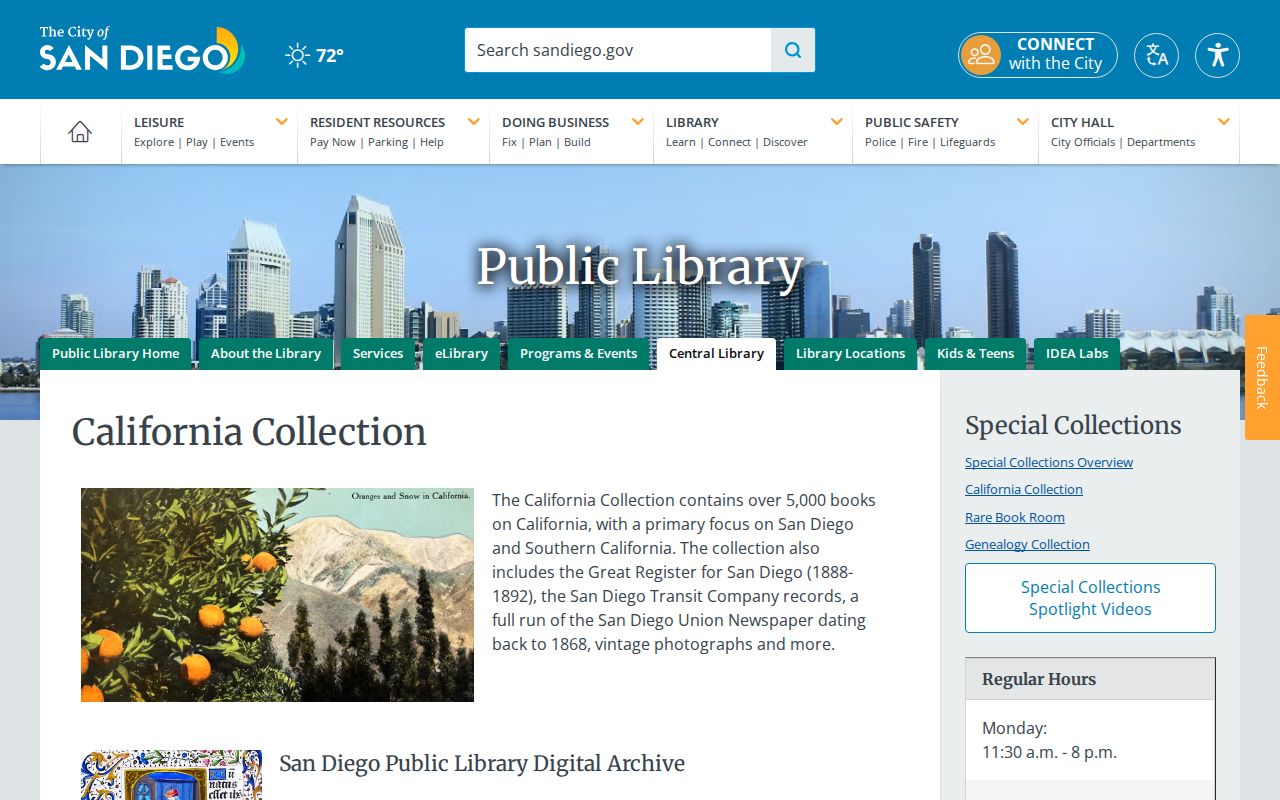
| San Diego city directories | 1886-2021 shelf span | San Diego Public Library California Collection | Reference collection, library help, some subscriptions |
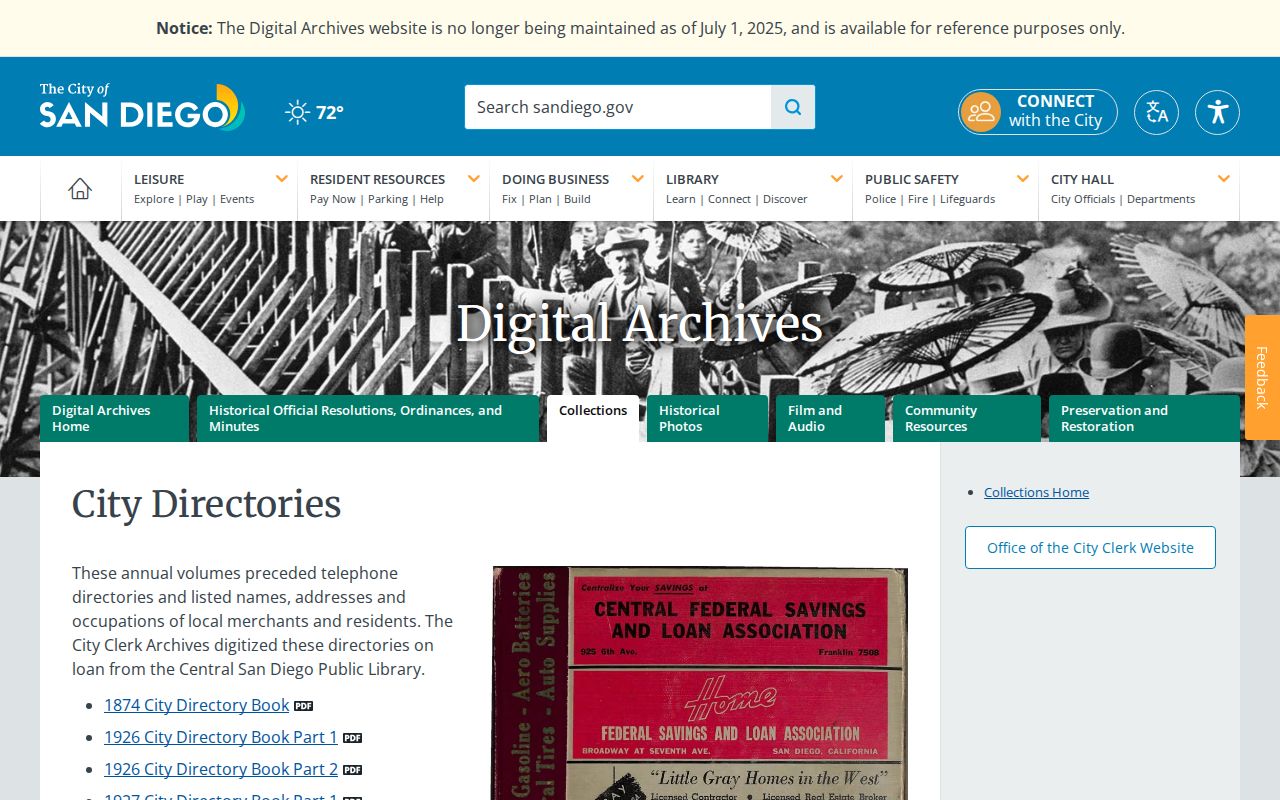
| Digitized San Diego directories | 1874; selected 1926-1960 runs, including suburban branches | San Diego Digital Archives | Online links remain, but the archive is reference-only after July 1, 2025 |
| San Diego-area city and county directories | Scattered annual runs; Encinitas inclusion varies | County Library, FamilySearch, Internet Archive catalogs | Search by community, surname, and year |
| Telephone and criss-cross volumes | Twentieth-century runs; exact shelf years need confirmation | Libraries and historical societies | Address-to-name research in person or by reference inquiry |
| Local historical collections | Community and item-level coverage varies | Encinitas Historical Society and San Dieguito Heritage Museum | Appointment or research inquiry |
A city directory can bridge a name and an old address, then send a researcher to a deed, census, obituary, or probate file. It cannot fill every gap between publication years.
San Diego Public Library's California Collection is the main physical shelf for the documented city-directory span.
Find Encinitas in Suburban Directory Volumes
The digital collection is a finding aid, not a promise that every suburb appears in every scan. The official page links 1926 through 1944 or 1945, 1947 through 1948, 1950, 1952, 1953 through 1954, and City and Suburban branches from 1955 through 1958, with Suburban volumes in 1959 and 1960. Search the suburban branch before assuming that a missing main-city name means a missing person.
Use the five historic community names as search terms: Cardiff-by-the-Sea, Leucadia, Old Encinitas, New Encinitas, and Olivenhain. A postal name can differ from an incorporated-city label. Coast Highway 101 may be printed as Highway 101. Rural routes, post-office boxes, missing house numbers, and subdivision headings can all change the way an entry is found.
The San Diego digital directory collection preserves selected scans and explains where the city and suburban branches sit.
The 1874 Book Was Business Only
The 1874 San Diego booklet came from the Office of the San Diego Daily Union and is described as a business directory. It should not be treated as a comprehensive resident list. The fuller 1886 and 1887 city-directory years offer a better starting point for people and addresses, but Encinitas was still a set of communities outside the later incorporated-city frame.
Publisher changes also matter. San Diego Directory Company appears in spot years including 1903, 1907, 1921, 1927, 1933, 1938, 1940, 1943, 1945, and 1948. R.L. Polk appears in 1952, 1956, 1961, and 1966. Pacific Telephone and Telegraph appears in 1950, 1955, and 1960. Community Directory Company appears in 1962, and Luskey Brothers in 1965. These dates are documented publisher anchors, not a complete bibliography.
That history is useful because a missing year may reflect publication practice rather than a missing household. Note the title page, publisher, branch, page number, and any community heading before comparing names.
Read an Encinitas City Directory Entry
A typical San Diego-area twentieth-century entry has more than a name. An alphabetical entry may pair a surname and given name with a spouse in parentheses, a widow notation, an occupation, an employer or business, and a home address. A street or criss-cross section reverses the order, moving from street name and house number to an occupant, business, or telephone. The exact abbreviation key in the volume controls the reading.
| Entry field | What it can mean |
|---|---|
| Indexed name | Person as printed, often with a given initial or spouse notation. |
| Occupation or business | Work role or enterprise listed for that publication year. |
| Residence marker | Marks such as “h” or “r” depend on the volume's abbreviation key. |
| Street address | House number and street, sometimes with a rural route or post-office label. |
| Telephone | Present only when the directory chose to print it. |
| Page and year | The citation needed to reproduce the exact household snapshot. |
- Criss-cross directory
- A reverse street-order section that moves from an address toward a listed name or business.
- Householder index
- An index of a person associated with a household, not a complete list of every person in the dwelling.
- Abbreviation key
- The volume's own legend for marks such as residence, home, widow, room, or business.
- Compilation date
- The period when information was gathered, which may not equal the cover year or a move date.
Publishers Changed Across Encinitas City Directory Years
Publisher changes can alter the shape of a city directory. A telephone volume may favor subscribers. A Polk volume may use a different street order. A suburban branch may separate communities from the main city. Compare like with like before reading a disappearance as a move or death.
Printed books also carry the habits of their era. Women may appear under a spouse, rural households may be absent, and boarders or people who declined listing may never show. The absence of a name is therefore a research gap, not a finding.
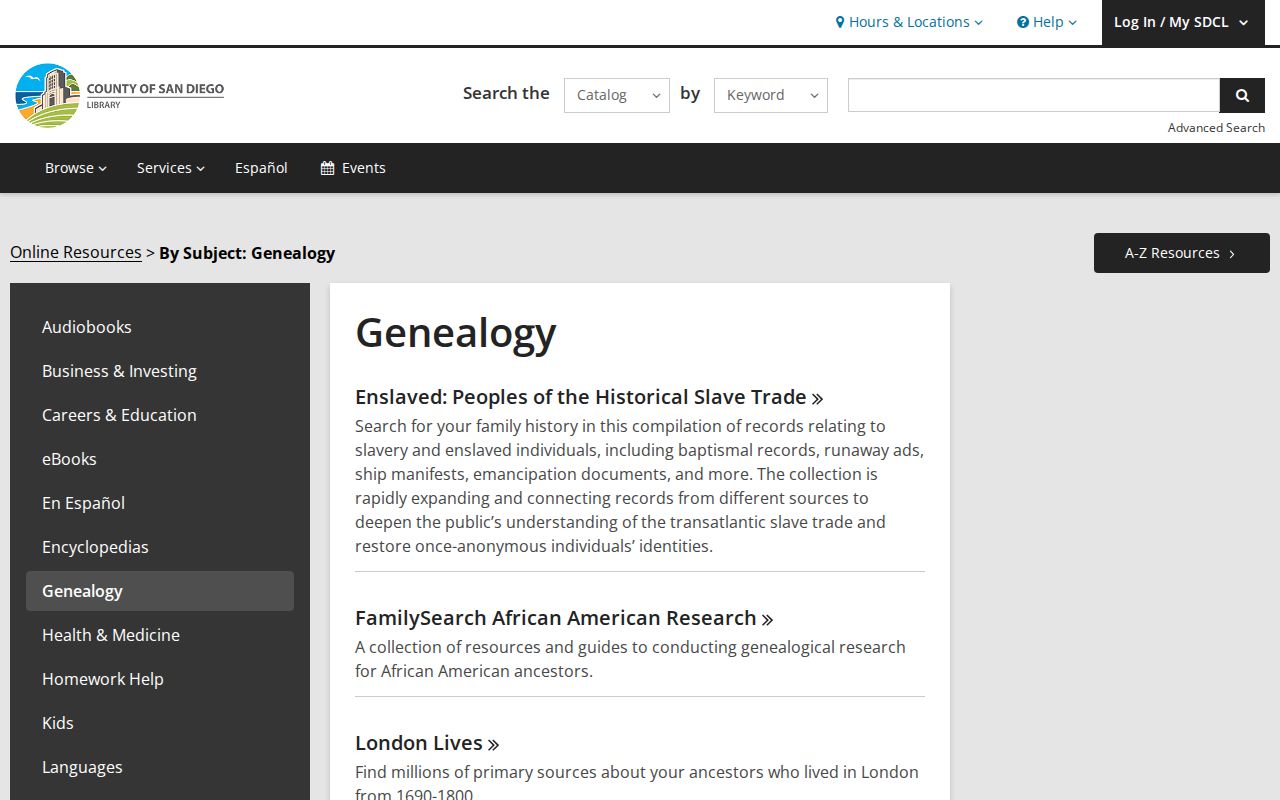
San Diego County Library genealogy resources add MyHeritage Library Edition and reference help for directory and census follow-up.
Trace an Encinitas Household Year by Year
A city directory works best as a dated sequence. Start with one known person, address, or community, and keep the page citation. Then test adjacent years and a matching census. A directory shows occupancy more often than legal ownership, so use deeds for title and probate or obituaries for death and family links.
- Photograph or record the title page, publisher, year, branch, page, and abbreviation key before copying the entry.
- Search the alphabetical section and the street or criss-cross section for the same person and address.
- Compare nearby annual volumes and mark each move, spouse notation, address change, or disappearance as a lead.
- Pair 1940 and 1950 directory clues with the corresponding open federal census, using address, spouse, age, birthplace, and occupation to separate same-name people.
- Close the historical trail with a deed, permit, obituary, cemetery clue, probate file, or local archive item.
For a modern address, a street-by-street record chain belongs on the Encinitas street directory page. The historical volume remains the place to read what a publisher chose to print about a household at one time.
Encinitas Library and the 1883 Schoolhouse
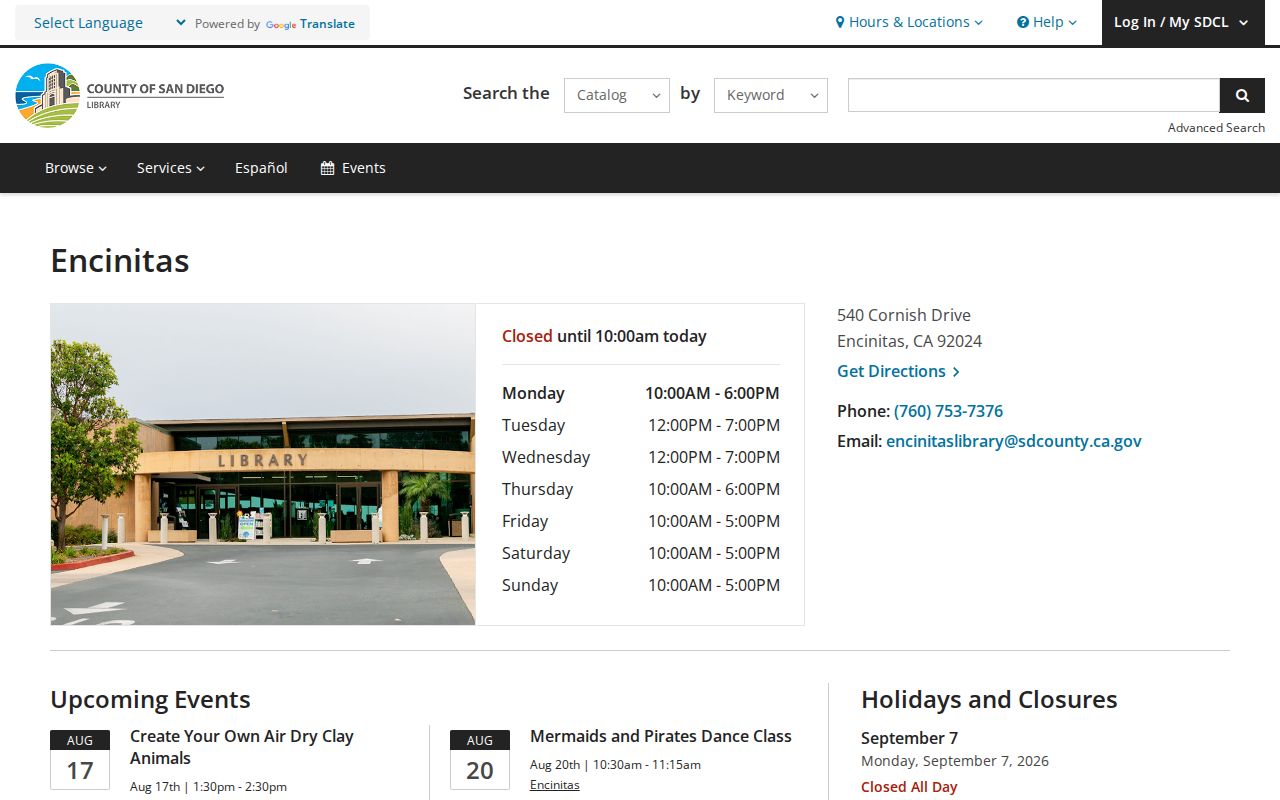
The Encinitas Library is at 540 Cornish Drive, Encinitas, CA 92024, telephone (760) 753-7376, with posted hours Monday 10:00 to 6:00, Tuesday and Wednesday 12:00 to 7:00, Thursday 10:00 to 6:00, and Friday through Sunday 10:00 to 5:00. The branch offers reference help and County Library genealogy access. Confirm hours before travel.
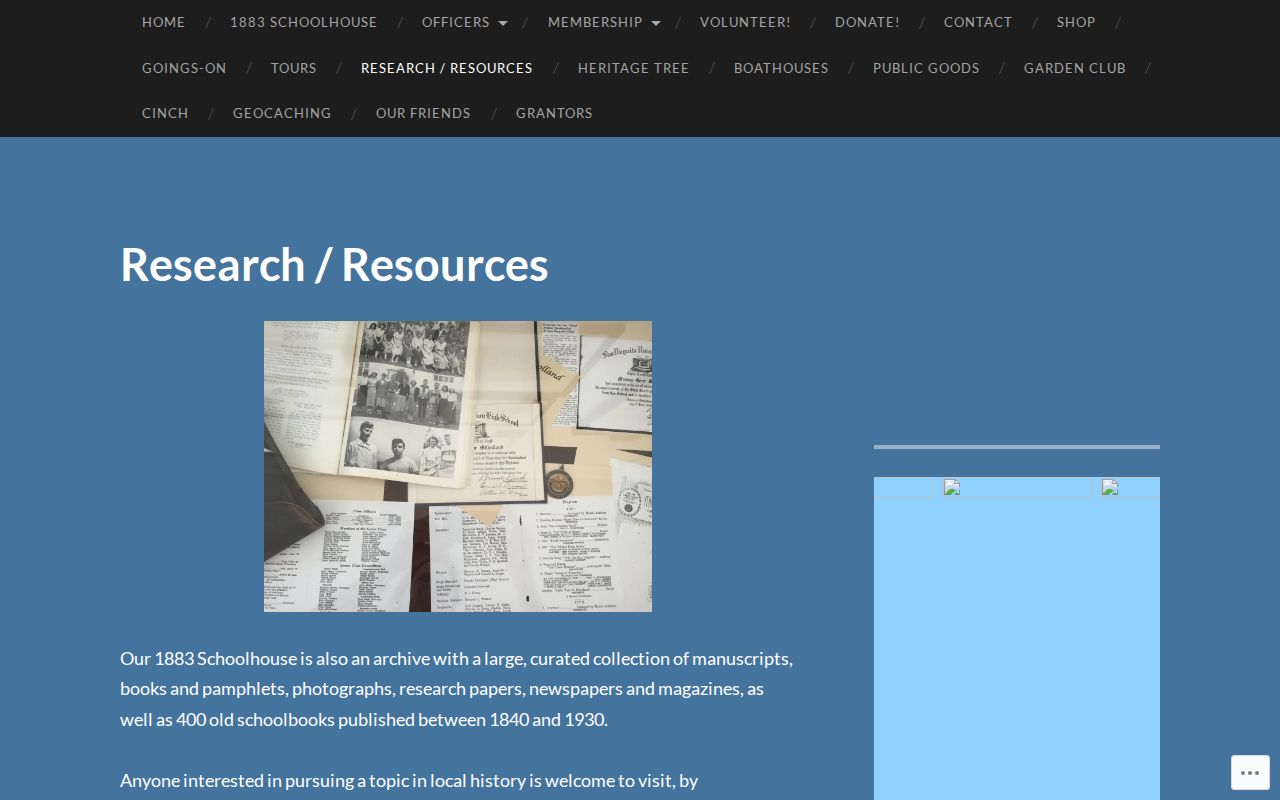
The Encinitas Historical Society archive in the 1883 Schoolhouse is appointment-access. Its holdings include manuscripts, books, pamphlets, photographs, research papers, newspapers, magazines, about 400 schoolbooks published from 1840 through 1930, annuals, maps, posters, oral-history recordings and transcripts, and topical house, water, and local studies. It covers Encinitas, Cardiff, Leucadia, the El Camino Real corridor, and Olivenhain.
The Encinitas Library branch page is the local reference contact for current access details.
The Encinitas Historical Society resources page describes appointment research in the old schoolhouse archive.
When Early Encinitas Directories Omit a Name
Early directory gaps are a known feature, not a surprise. Women, rural households, boarders, people without telephones, and people who declined listing may vanish from a volume. Search a spouse, a street, a business, a community, and a nearby year. Then compare the result with a census, newspaper, deed, permit, or school annual.
The city directory can be a strong lead for family history, classmate reconnection, and house-history work. It becomes stronger when the entry carries its own page, publisher, year, and abbreviation meaning. A blank page should remain a blank page in the research notes.
A Growing Encinitas Historical Archive
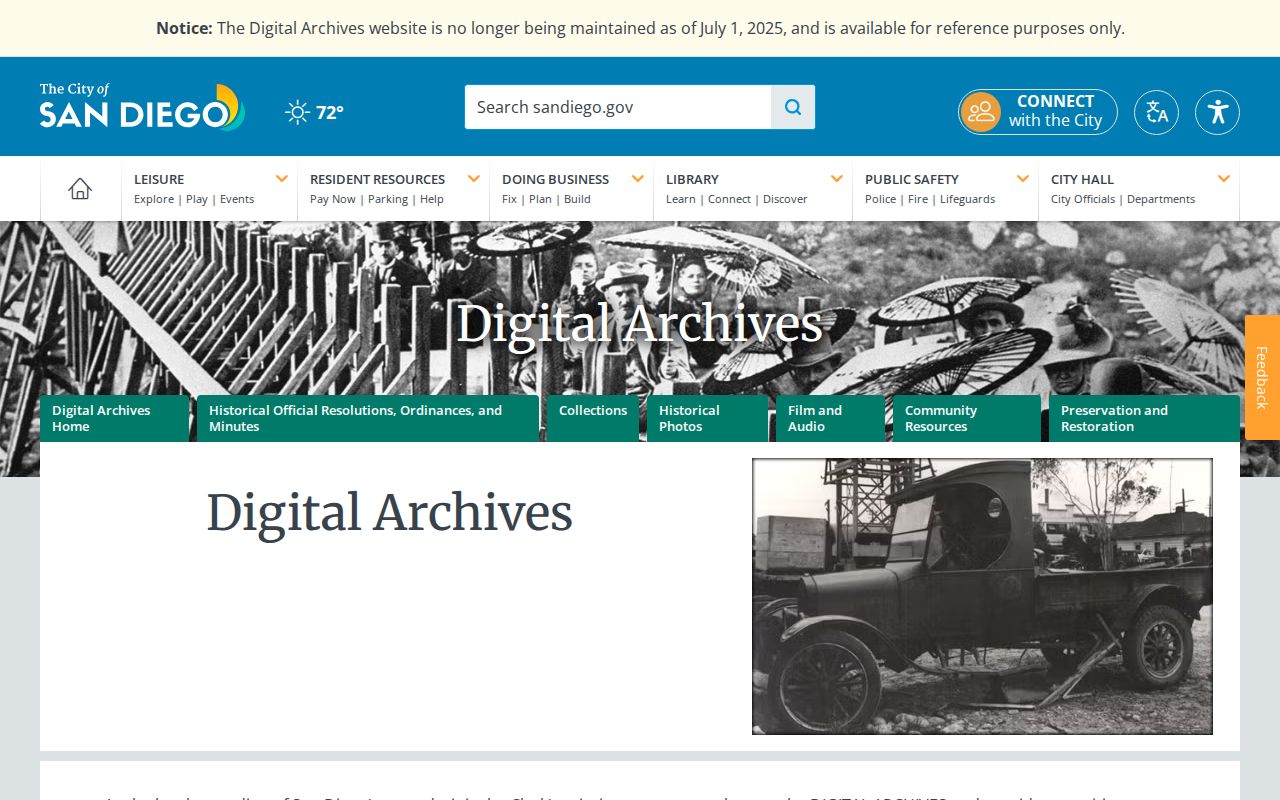
The digital shelf is not the whole local record. The San Diego Digital Archives became reference-only in July 2025, while historic links remain. The Encinitas Historical Society reported an active 2024 through 2026 digitization effort: volunteers were inventorying the archive, scanning Encinitas Transcript volumes from 1892-93 and 1896, sorting 15,000 to 20,000 Coast News negatives, digitizing 97 percent of posters, maps, newspapers, pamphlets, and objects, and processing more than 100 oral-history tapes and videos with transcripts.
Those numbers do not prove that a particular resident appears in a collection. They do show why a library shelf, historical society inquiry, and newspaper archive should remain in the search plan when a city directory scan comes up empty. Local history is being organized, but item-level coverage still needs confirmation.
The San Diego Digital Archives status page explains the reference-only condition of the older online collection.
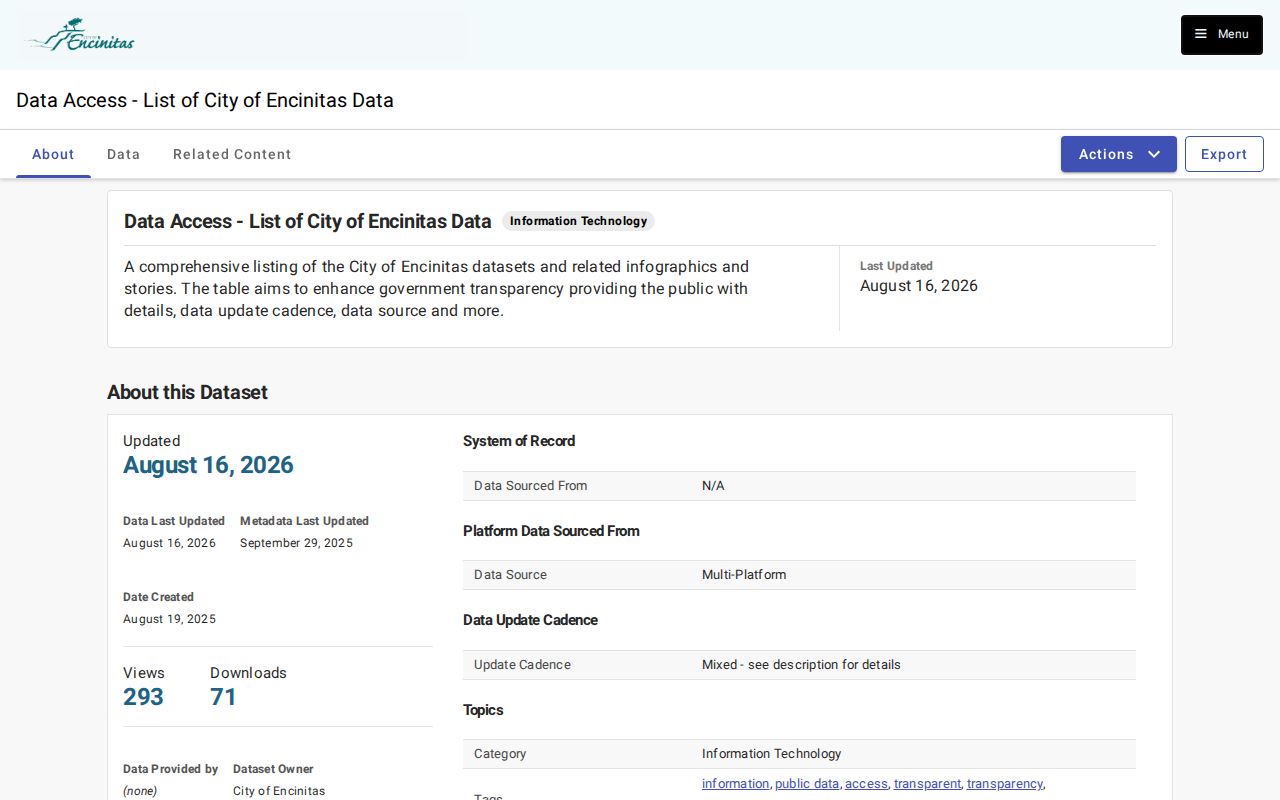
The city data catalog adds a modern records clue. It documents datasets, update cadence, and systems of record, which helps a researcher understand where a municipal trail may be maintained.
Encinitas's data-access catalog records the city systems and datasets described in the research.
Library policy is another useful context check. It helps distinguish a collection-development lead from a confirmed item-level directory holding.
The County Library collection policy provides context for how local-history material is selected and maintained.
The San Dieguito Heritage Museum extends the regional story with photographs, objects, and local history. Its materials may explain a community or family clue that a directory cannot.
The San Dieguito Heritage Museum is a regional context source for Encinitas names, places, and local history.