
Sources for Previous Residents of an Encinitas Address
Each source below has a different span and evidentiary purpose. The era table keeps a directory occupant separate from a deed party and a structure date separate from a move date. Use the source with the date and role that fit the question. Previous residents are reconstructed from dated clues, not from one master list.
| Source | Years it covers | Where held | What it shows |
|---|---|---|---|
| Recorder web index | 1970-present | SDARCC Official Records | Grantor, grantee, instrument type, number, and recording date |
| Recorder kiosks and deed books | Current APN bridge; pre-1970 historical series | Five ARCC offices and County Archives | Older title chain, indexes, legal descriptions, maps |
| City and suburban directories | SDPL shelf 1886-2021; selected digital 1955-1960 suburban runs | SDPL California Collection and digital archives | Listed name, address, spouse, occupation, and street snapshot |
| Federal census | Through 1950 as of 2026 | National Archives and library databases | Household composition, enumeration address, relationships |
| Encinitas permits | City-era and current CSS; exact digital start not stated | City Development Services and Clerk request | Alteration dates, project contacts, plans, inspections |
| Newspapers and local history | San Diego Union from 1868 at SDPL; local coverage varies | Libraries and Encinitas Historical Society | Death, family, business, property, event, and community leads |
Start With the APN, Not Street Spelling
Enter the address in Encinitas Land Records and preserve the ten-digit APN, situs address, map point, and community label. The city map is free, requires disclaimer acceptance, and supports address or APN search, map click, layers, measurement, and print. An APN is an administrative parcel key, not a resident identifier. It can change after subdivision or lot combination, so preserve the legal description too. This is the first safeguard when tracing previous residents.
Situs is the physical parcel location. A tax mailing address can be elsewhere. A legal description can retain continuity when a street name or number changes. If a parcel lacks a modern address, an Encinitas address request can require APN, boundaries, roads, access, structures, utilities, and proof of ownership or authorization. That file may preserve when an address entered the current system. Previous residents often disappear at that exact address transition.
- Grantor
- The party transferring an interest in a recorded instrument.
- Grantee
- The party receiving an interest or appearing as the recipient in that instrument.
- Chain of title
- A sequence of recorded instruments connecting property interests over time.
- Legal description
- The land description used in an instrument, which can be more stable than a street label.
Reverse the Encinitas Grantor-Grantee Chain
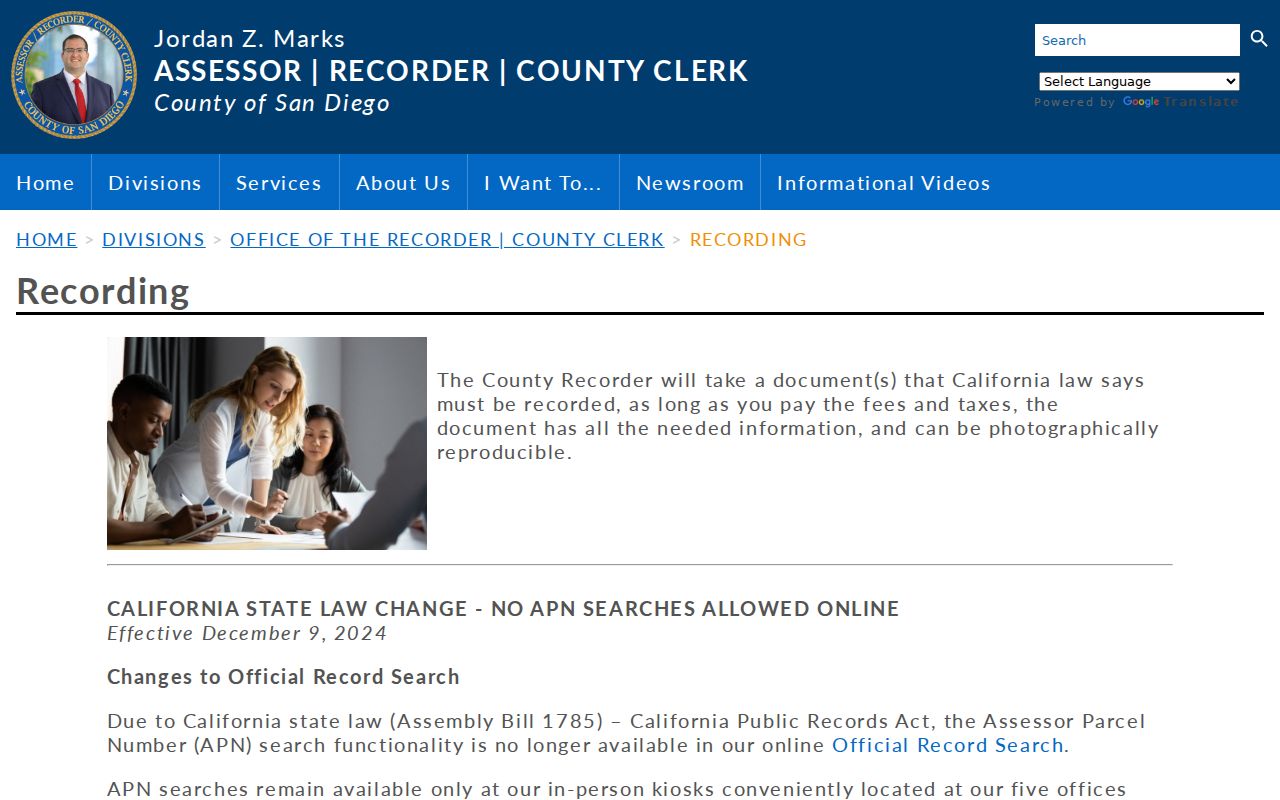
The SDARCC Recorder web index reaches from 1970 to the present and supports party or name, document number, date or date range, and document type searches. If a current deed or party is known, preserve the document number, recording date, grantor, grantee, instrument type, and legal description. Then search the seller or grantor as an earlier grantee. Repeat until the web coverage ends.
APN searching was removed from the public web index on December 9, 2024, after AB 1785. The APN path remains at five ARCC public kiosks. That is the practical bridge when an address is known but a party name is not. Copies can be purchased, and images are viewable at office kiosks. A free online index is a finding aid, not the full instrument.
Trust transfers, reconveyances, refinances, interspousal deeds, and name variants can look like new ownership events. Compare the legal description and chronology before assigning a household change. A recorded date memorializes an instrument; it does not prove when someone moved. Previous residents research needs that caution at every deed step.
SDARCC recorded-document guidance describes the 1970-present index and the grantor-grantee route.
Cross the 1970 Web Cutoff at County Archives
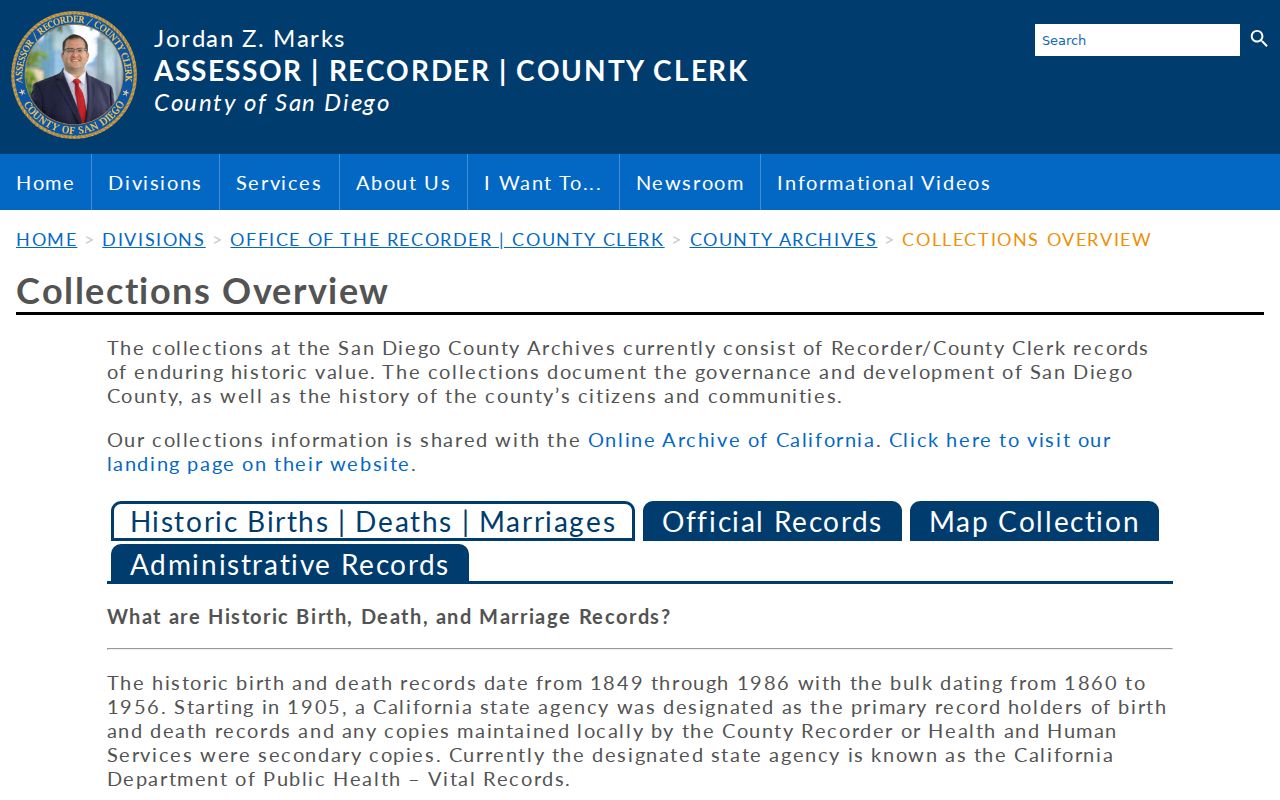
Pre-1970 deed work shifts from the online index to public kiosks, historical books, indexes, and County Archives. The San Diego County Archives is at 10144 Mission Gorge Road, Santee, CA 92071, telephone (619) 237-0502, email archives@sdcounty.ca.gov. Its collections include handwritten and typed record series, older indexes, early subdivision and assessor maps, and unusual property-related series such as homesteads, separate property, sole-trader listings, wills, Torrens certificates, water claims, and historic tax lists.
Ask an archivist a focused question. Provide the modern address, APN, known deed number or party, approximate date span, community label, and legal description. The map collection includes subdivisions, parcel boundaries and assessed plats, surveys, facilities districts, highways and rights-of-way, and cemetery plots. County Archives is a research fallback, not an instant name search.
The County Archives collections overview is the route for older deed and map series.
Put Occupants Between Encinitas Deed Dates
Deeds establish parties to a property instrument. Directories and census pages can place a household between two recording dates. San Diego Public Library's California Collection lists city directories from 1886 through 2021, and selected digitized suburban volumes reach 1955 through 1960. Search the street section, the alphabetical section, and the historic community name. The exact Encinitas inclusion still needs a page-level check, especially when the previous residents trail crosses a community label.
The federal census is open through 1950 as of 2026. Pair 1940 or 1950 directory entries with the matching census and compare address, spouse, age, birthplace, and occupation. An obituary, cemetery lead, probate filing, or permit can explain a gap. A missing directory entry is not proof that a household was absent.
The SDARCC records hub connects assessor, recorder, and county-clerk paths used alongside historical occupants.
Search Five Community Names Before 1986
Encinitas records are not all born under “Encinitas.” Cardiff-by-the-Sea, Leucadia, Old Encinitas, New Encinitas, and Olivenhain became one city in 1986. Search all five labels, San Dieguito, the postal city, and corridor names such as Coast Highway 101. The older identity may be the only path to a newspaper, directory, permit, or school annual.
Leucadia was associated with English spiritualists and Greek or mythological street names. Cardiff has the McKinnon homestead from 1875 and the J. Frank Cullen tract from 1909. German immigrants established agricultural Olivenhain in 1884. These are not decorative facts. They tell a researcher which heading or community name may appear in a record.
Use Construction Records to Date a House
Encinitas Customer Self Service can be searched by map, address, or APN. Public results may show permit or record number, project type, scope, status, application, issue and completion dates, inspections, related permits, plans, and contacts. A public-record or plan-copy request may be needed for a complete history. The city did not publish an exact start year for migrated electronic permits.
Construction evidence can place an addition, alteration, demolition, or completion in time. It cannot identify every past resident. Applicant, agent, designer, contractor, and owner roles belong to the project record. Compare those fields with a directory, census, deed, obituary, or probate source before turning a project clue into a household story.
Close a Past Resident Trail With Probate
Probate can explain why a deed changes after a death and can name a representative, heirs, or devisees in a public filing. Search the San Diego Superior Court probate index by decedent name, then inspect the petition, representative information, Register of Actions, and official file. Pair an obituary with the probate or deed instead of treating the newspaper as final authority.
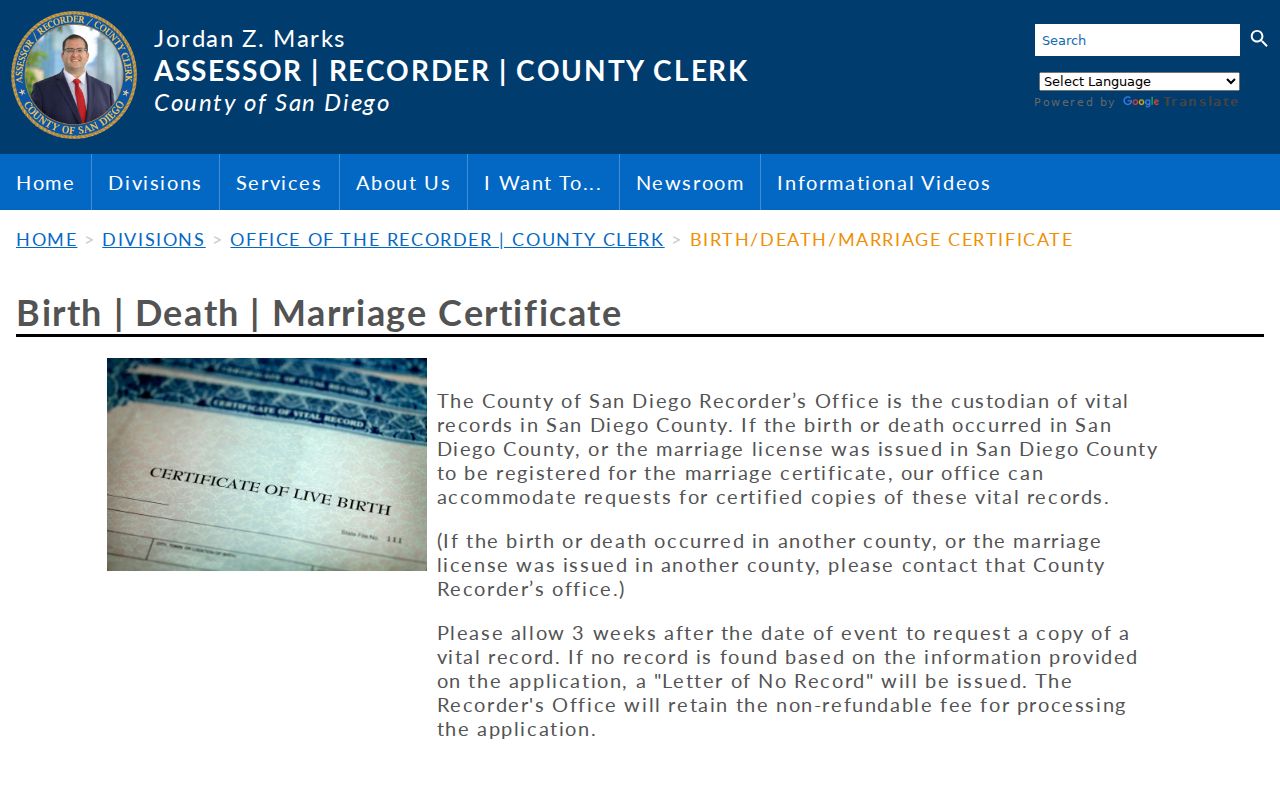
Vital-record rules still apply. County ARCC and CDPH separate authorized and informational copies. A death certificate may confirm date, place, and family facts, while Social Security and medical details are protected or redacted. A failed search may produce a Letter of No Record and retain the search fee, so record the result and the office used.
The county vital-certificate access page explains the copy routes that can close a previous-resident trail.
Sanborn Maps Show Buildings, Not People
Sanborn fire-insurance maps can show structure footprint, use, and address context. The San Diego Public Library California Collection has subscription Sanborn Maps and more than 800 maps, and the Library of Congress has digitized California sheets. Exact Encinitas sheet years were not located in an authoritative inventory. Treat a map as building evidence, then pair it with a directory, deed, permit, newspaper, or census.
The Encinitas Historical Society adds house studies such as “Old Log House” and “House That Water Built,” along with photographs, maps, newspapers, oral histories, and local research papers. Appointment access and item-level coverage vary.
Lawful house history. Use previous-resident research for genealogy, preservation, estate work, and personal history. Do not use an address trail to stalk, harass, intimidate, or harm any person.
Keep the Encinitas Previous Residents Trail Auditable
Save the modern address, APN in city and county formats, map date, legal description, deed document numbers, recording dates, grantor and grantee roles, permit IDs, directory title and page, census enumeration identifier, obituary citation, and probate case number. Label each date as recording, publication, enumeration, application, issue, completion, filing, or event.
Owner, occupant, mailing recipient, permit contact, voter, and heir are different statuses. A current deed does not rewrite a past household. A careful previous-residents search keeps the source trail visible and states the gap instead of guessing. That is how previous residents remain a documented history rather than a list of assumptions.